
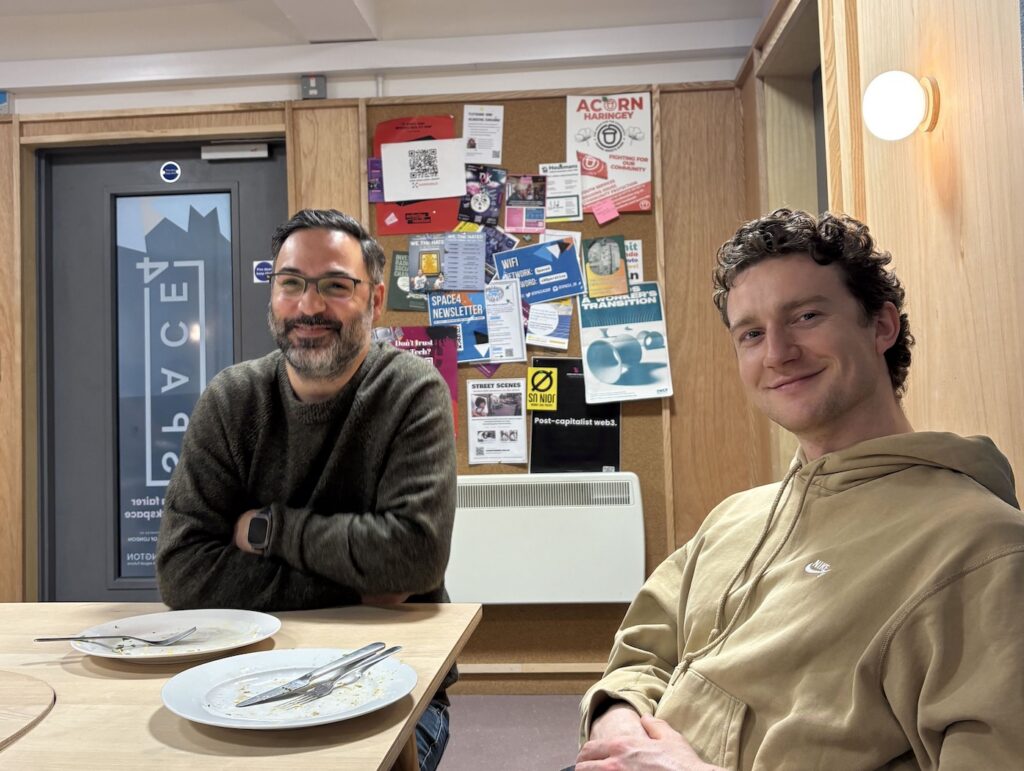
“When I think about what SPACE4 has given me, I think first about the people. I came looking for an affordable place to work, somewhere practical and close enough for me and my clients. I found that, but I also found people who have become friends, people who have shared opportunities and people who have helped me think differently about my work. I have been able to pass some of that support on by mentoring and encouraging people who are just starting out. That feels important. A workspace is at its best when it helps you do your own work and gives you ways to contribute to something beyond it.”
A creative business, a cooperative community and the opportunities that grow between people
For Romain, running a creative business has always meant more than delivering a finished film or a carefully graded image. It has meant adapting, finding the right collaborators and building a working life around the people and opportunities that make good work possible.
He founded his creative company in 2012, beginning with photography before moving into videography and, increasingly, post-production and colour grading. Over the years, his working arrangements have changed: from home-working with a business partner, to an expensive office in Elephant and Castle, to fixed desks at Space4 and, eventually, a private office suited to the technical demands of his work.
He has now been part of SPACE4 for around six years. What has kept him there is not simply the practical convenience of a desk or office. It is the network of relationships that has grown around him—and the way those relationships have helped his business, his confidence as a mentor and his sense of connection to the local creative community.
“More than once I’ve wondered if I’ve outgrown the space, yet the people I meet here are part of why my business grows.”
A workspace that works for real life
Before SPACE4, Romain and his business partner tried to make home-working function across two parts of London. They kept webcams and microphones connected through the day so they could work as though they were in the same room. It was resourceful, but the practicalities of creative production—and the overlap between household and working life—made it difficult to sustain.
Their next office, in Elephant and Castle, solved some of those problems but brought a new one: the rent was high, the service did not offer much in return, and there was little sense of community. When the lease came to an end and Romain wanted a base closer to home in North London, Space4 offered a more balanced option: affordable, accessible and populated by small teams, charities and people developing interesting projects.
He initially took two fixed desks, sharing the space with a photographer. A flexible arrangement also helped make the costs manageable: the team provided event photography for Space4 in return for a reduction on the second desk. As his work shifted further towards colour grading, he eventually moved into a private office where he could control the light and concentrate.
When a conversation becomes an opportunity
One of the clearest examples of Space4’s impact came through a connection to an Islington Council programme called Lift, which supported young people interested in web design and video editing. An introduction through the Space4 network led Romain to produce a promotional video for the programme. It also opened the door to mentoring young people who wanted to find their way into creative work.
One of the people he mentored, Bartek, later worked with him on and off over several years. Their professional relationship developed into a friendship that continued even after Bartek and his wife moved to Japan. For Romain, this is a good example of how an introduction can lead somewhere neither person necessarily expected.
The connections have continued. Through local outreach and creative-industry initiatives, Romain has spoken with people trying to enter the sector, offered a small number of assisting opportunities and shared advice about what to learn next. He has also met people whose skills and interests have led to new conversations and potential collaborations—including a current project he is developing with someone he met through the wider Space4 community.
A word to people starting out in creative work
Romain describes the creative industries as competitive but rewarding. His advice is to take the work seriously enough to become immersed in it: learn the craft, stay curious, support other people’s work and build relationships that are not limited to the next transaction. In creative industries, colleagues and friends can become part of the same network—and that network can help sustain a career over time.
“It becomes less transactional and more like a lifestyle – of being completely immersed in it, and it so happens that all of your mates are also people that you work with.”
Let’s Talk
Tell us more about what you’re looking for.
Visit Us
2nd Floor, 113-115 Fonthill Road, Finsbury Park, N4 3HH
Guests should use the black gate entrance. Press the buzzers for ‘SPACE4’
Finsbury Park (1 min walk) – Victoria/Piccadilly Lines + Suburban rail
Buses: 4, 19, 29, 106, 153, 210, 236, 253, 254, 257, W3, W7